
Saving the starry, starry night
Greater Big Bend Dark Sky Reserve is the world’s largest international, and first cross-border, reserve

When the Greater Big Bend Dark Sky Reserve was created in 2022, the goal was to protect the remaining dark night skies of West Texas. The borderlands between the United States and Mexico showcase some of the darkest nights in North America, says DarkSky International, which certifies such reserves.
At 9.6 million acres—almost the size of Denali, Yellowstone and Glacier Bay national parks combined—it is the world’s largest International Dark Sky Reserve as well as its first bi-national reserve, spanning the Rio Grande/Rio Bravo on both sides of the US-Mexico border.
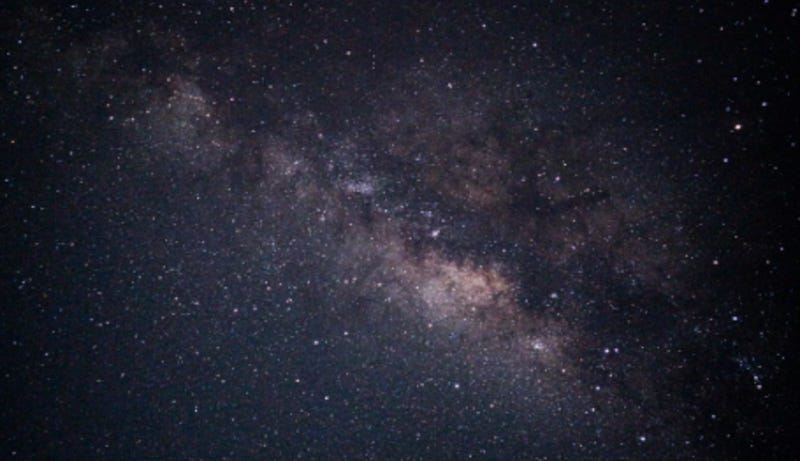
Bagas Putra, Pexels
But the US administration’s proposals to expand border wall construction in Texas through Big Bend National Park, the state’s first such park when it was created in 1935, may affect the dark skies that the Reserve was created to protect.
“New proposals through the ecologically sensitive and pristine protected lands of Big Bend threaten one of the largest protected dark sky regions in the United States,” Dark Sky said in March.
The US government has now waived environmental regulations for construction along more than 100 miles from near the Closed Canyon trail in Big Bend Ranch State Park through all of Big Bend National Park and into remote parts of southeastern Brewster County. That $1.7 billion worth of work will apparently include installing cameras and sensors, roads and barriers in strategic areas to restrict vehicle access in the Big Bend sector.
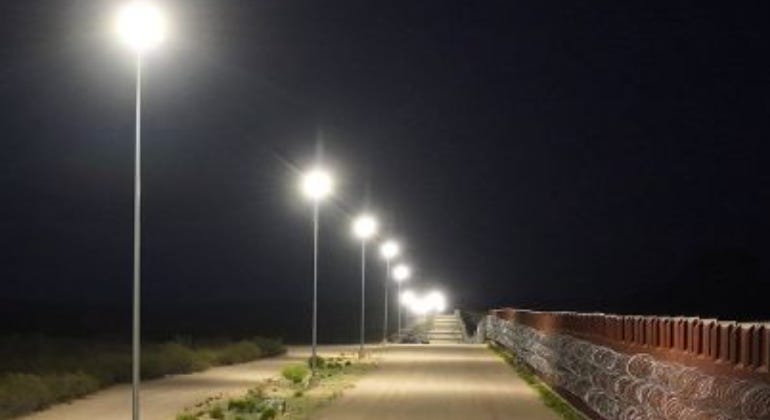
The border wall and new lights, San Bernardino National Wildlife Refuge, Arizona. Dark Sky.
Six former superintendents of Big Bend National Park had unsuccessfully urged the government not to waive the environmental regulations. “The diminishment of the area’s wild character, impeded access to the Rio Grande for recreation, and loss of opportunities to experience the darkest night sky in the nation if the infrastructure were lighted, would cause tremendous damage to the area’s economy, which is highly dependent upon tourism,” they said.
The protected landscape encompasses a vast area of the Chihuahuan Desert characterized by diverse desert habitat and wildlife, complex geology, and a rich human history. Spanning from Fort Davis, Texas, to the Rio Grande River at the US/Mexico international border, the reserve also includes three protected areas in Mexico – Maderas del Carmen, Ocampo, and Cañón de Santa Elena.
Nature-based tourism, including stargazing and astrotourism, helps support local economies on both sides of the border. Each year, about 50,000 people come to the University of Texas’ McDonald Observatory to experience its Star Parties. Big Bend National Park promotes stargazing with regular events.
It is not just tourists who benefit from dark skies. “Animals, including humans, rely on the rhythms of day and night to function,” explains The Nature Conservancy. “Migratory birds use stars to establish their north-south orientation. Nocturnal mammals hunt at night under the cover of darkness. Plants adjust their growth with the seasons, responding, in part, to changes in patterns of light and darkness.”
Oil and gas workers also benefit. In the Permian Basin in West Texas, which produces nearly half of the USA’s oil, dark-sky friendly lighting makes facilities safer, Reasons to be Cheerful reported. Shielded, targeted bulbs help aim the light where it’s most needed; warm-temperature lights help the human eye adjust to be able to see into the shadows.
Jerrell Shircliff, formerly of Howard Energy Partners, pushed for change after watching a joint-venture company go dark-sky friendly at one of its compressor stations. Howard quickly noticed a reduction in both light pollution and costs, and crew members reported feeling safer –– Shircliff says that snakes are a common fear among folks called in to work at night.
“We’ve been working with the oil and gas industry for the better part of a decade, lending best practices,” says Stephen Hummel, who co-ordinates the observatory’s Dark Skies Initiative. “The goal is really to change the industry and show that there are just better, or more efficient, ways of lighting that preserve the environment and their safety and security. It’s one light at a time, but we’re starting to turn a corner.”
The McDonald Observatory, a world-class astronomical observatory and research facility built in 1939 on top of Mount Locke in the Davis Mountain Range, 6,500 feet above sea level, is in the Reserve’s core area and looms over the Chihuahuan Desert. It falls within one of Texas’ three “sky islands” - elevated, cooler habitats trapped above a drier, warmer area - the Chisos Mountains, Guadalupe Mountains in Guadalupe Mountains National Park, and the Davis Mountains.
Observatory superintendent Teznie Pugh did not know how widespread light pollution was when she started work in 2020. “As an astronomer there is always an underlying concern about the impacts of lighting on data,” she said. “But the issues are so much broader than I’d thought.”
The observatory’s Dark Skies initiative brought local landowners, parks, and The Nature Conservancy together to work on bringing the whole region behind a plan to preserve the Texas night sky. The rapid increase in brightness researchers that had been documented from 2014 to 2020 stopped. And then in 2022, they helped establish the Greater Big Bend International Dark Sky Reserve.
“We are recognizing decades of hard work, nocturnal environmental stewardship, stellar outreach programs, and multiple local incentives to provide tangible and feasible solutions that limit the spread of excessive and wasteful artificial light,” said Ashley Wilson, the International Dark-Sky Association’s director of conservation. “Greater Big Bend demonstrates that partnerships and dark-sky efforts at the landscape scale can become a reality with the dedication from a team of key stakeholders and passionate communities.”
“Without the broad regional support and the long-standing efforts to preserve the natural beauty of the Big Bend region, a Dark Sky Reserve of this scale would not have been possible,” says Pugh. “It has been a true community effort, and the people of the area should be proud of what we have all achieved together.”
This was not a story I had expected to find when I began trying to learn more about the potential Big Bend International Park.
The idea of a park spanning the Texas-Mexico border first took shape in the mid-1930s during local efforts in Texas to establish Big Bend National Park. Creation of the Waterton-Glacier International Peace Park on the US-Canada border inspired the idea of a new international park on the southern border that would be collaboratively managed as a single ecosystem by Mexico and the US.
Rick LoBello Presents: Big Bend National Park, Nov. 16, 2015
In 1936, the US and Mexico established a commission to begin work on the idea of a Big Bend International Park. But despite discussions in various presidential administrations since then, it seems that most of the action in ensuing decades has been among ranchers, citizens, and private companies on both sides of the border.
A remarkable coalition is working on both sides of the border to preserve and restore the region’s ecological integrity, National Geographic wrote earlier this year. “It’s a group that includes scientists monitoring the limited wildlife passages in the border wall, private ranchers reintroducing native plants and animals to their lands, and Indigenous leaders reclaiming stewardship of sacred and ancestral territory.”
In the 1990s, The Nature Conservancy in Texas began working to protect the sky islands. It has protected 430,000 acres in West Texas, including properties it transferred to the Texas Parks and Wildlife Department to expand Big Bend Ranch State Park and Black Gap Wildlife Management Area. It began including dark-sky lighting provisions in conservation easements.
In 1994, Mexico designated two large reserves along the southern boundary of the Big Bend - Cañon de Santa Elena in Chihuahua, 693,000 acres, and Maderas del Carmen in Coahuila, 514,000 acres. Even earlier, though, Mexican ranchers in Coahuila had restored and protected habitat, so the small black bear population that survived the hunting pressures of the 1920s and 1930s in Coahuila and Texas found refuge on the Mexican side. As the population recovered in the 1980s, young black bears began dispersing into Texas. Big Bend National Park biologist Raymond Skiles called their return after a 40-year absence “the most important event in the history of the park, only surpassed by its declaration.”
When the Mexican government declared most of the El Carmen Mountains a “protected area” in 1994, the entire area was still mostly privately owned. But by 2000, many landowners were ready to sell. By 2002, CEMEX, the world’s third largest cement company, had acquired 187,000 acres. It said it wanted to re-establish wildlife corridors to protected lands in the US, and to protect the vital environmental services the area provides to both countries.
Now, 26 years later, El Carmen is one of North America’s most biodiverse areas and one of the five great wilderness ecosystems worldwide. A sanctuary for over 1,500 plant species and 450 animal species, it contains five different regional ecosystems - desert scrublands, grasslands, oak forest, pine forest, and gallery forest. El Carmen contributes to the wildlife conservation of 26% of the bird and 16% of the mammal species in Mexico. It has won many awards, including being chosen as Desert Project of the Year in 2023 by the Wildlife Habitat Council.
Mexico, which had no protected land adjacent to Big Bend in the Roosevelt era, now officially protects more acres in this region than the United States, and thus a significant piece of the binational dream may have already been achieved.
Sources: